Our Projects - Facial Palsy Rehabilitation Game
A Smartphone-Based Facial Electromyography Rehabilitation Game

M GordanProject Student
Undergraduate
EMG, AI, ML, Digital
2025
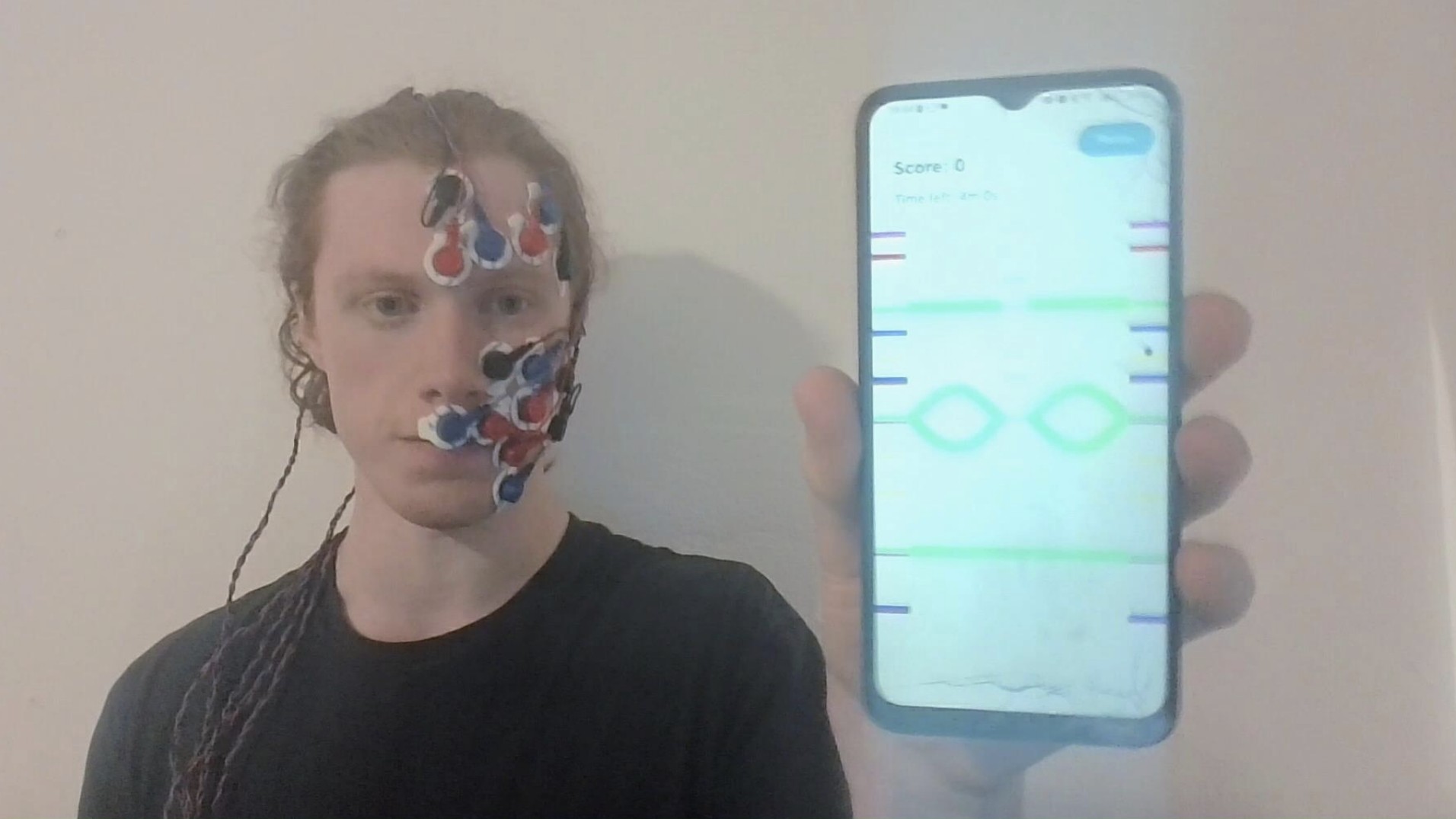
Facial palsy is a neurological condition that limits voluntary facial movement, often causing significant psychological, social, and emotional challenges. Traditional rehabilitation methods, such as mirror therapy or camera-based feedback, can be uncomfortable, demotivating, and ineffective, especially when muscle contractions are too subtle to see.
This project introduces an innovative solution: A smartphone-based rehabilitation game controlled by facial electromyography (fEMG) signals.
Instead of relying on visual feedback, the system detects electrical muscle activity, allowing even subtle or sub-visual movements to be used as input. The goal is to make rehabilitation:
Methods
The project integrates hardware, signal processing, machine learning, and game design into one system.
Results
Classification Performance
System Performance:
User Feedback:
Conclusions
This project demonstrates that: fEMG signals can be used as a reliable real-time control input, gamification significantly improves engagement in rehabilitation and a smartphone-based system is feasible and effective.