
Our Work
Our Projects - ALAN
ALAN - Advanced Upper-Limb Autonomous Neuro-Rehabilitation
Who

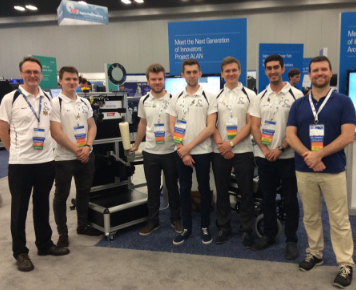
Arturs Grigals, Mark Narvidas, Maksims Kuznecovs, Jack Brookes, Simon North, Jake Smith, Rosie Smith, Declan Toyne, Alistair Malhorta, Chris Pritchard, Menelaos Kanakis, Stephen WorsleyProject Students
Level
Masters
Area
Robotics, Control, Tele-therapy
When
2017+
Details
Advancing stroke rehabilitation through robotics
Project ALAN brings together robotics, medical engineering, and secure data systems to develop innovative technology for post-stroke rehabilitation. Our goal is to create a commercially viable robotic rehabilitation device that helps patients recover movement more effectively while supporting healthcare providers with advanced tools.
The Problem
Stroke is one of the leading causes of long-term adult disability. In the UK, most stroke survivors experience some degree of arm weakness, and many continue to struggle with daily tasks years after their stroke.
Rehabilitation requires frequent, repetitive physiotherapy exercises. However, limited clinical resources often reduce the amount of therapy patients can receive, which can slow recovery.
Our Solution
Project ALAN is developing a robotic rehabilitation system designed to support therapists and increase the intensity and consistency of rehabilitation exercises.
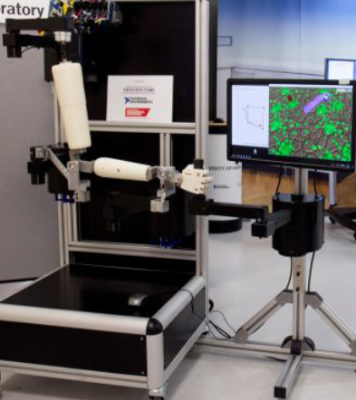
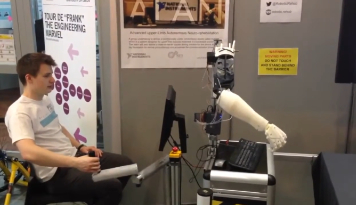
The project also introduces a humanoid robotic arm testing platform that can simulate human arm movements. This allows rehabilitation devices to be tested safely, efficiently, and repeatedly before entering clinical trials.
Future Impact
By combining robotic rehabilitation, advanced testing systems, and secure data exchange, Project ALAN aims to make rehabilitation more accessible and scalable.
The technology also opens the door to robotics-enabled remote physiotherapy, allowing patients to access high-quality rehabilitation from home while maintaining clinical oversight.
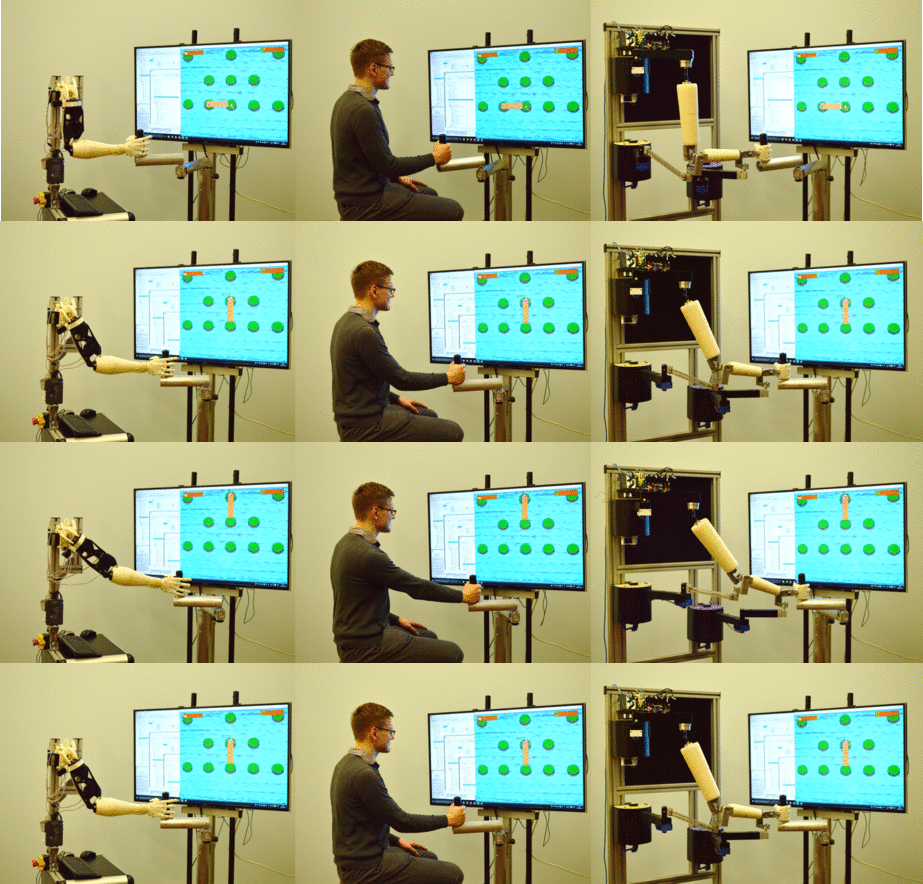
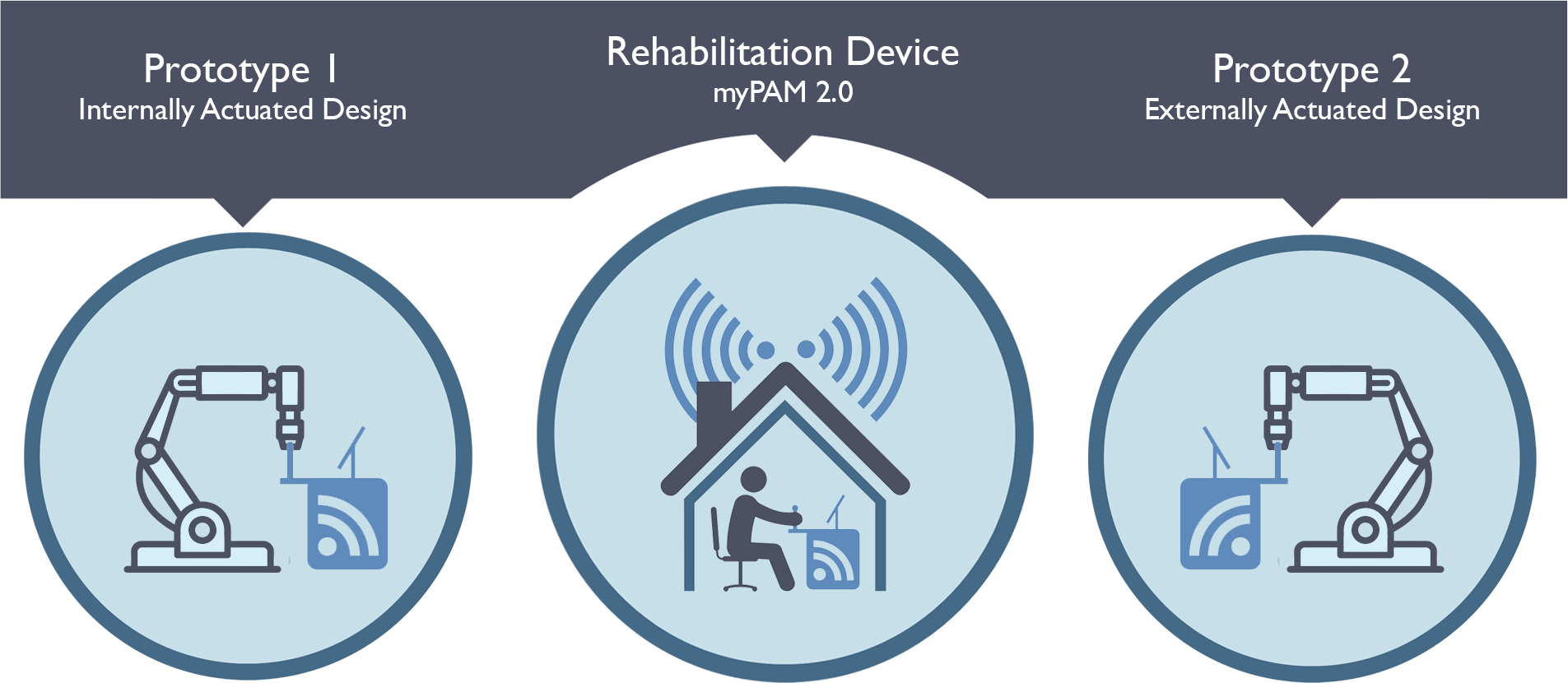
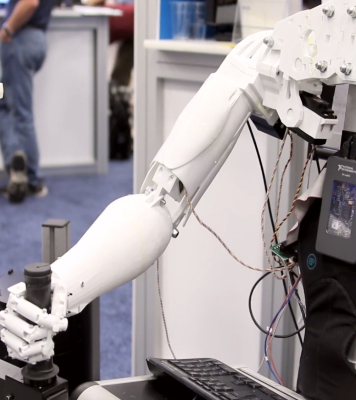
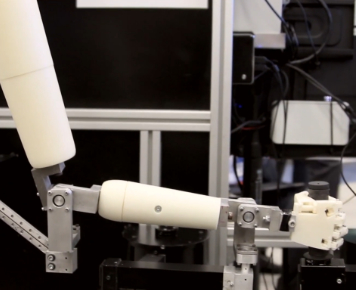
ALAN-Arm Prototype 1
Based on the open-source mechanical design InMoov, Prototype 1 followed a conventional humanoid arm approach with all actuators contained within the arm (hence the name of internally actuated design). It allowed the team to rapidly prototype the first iteration of ALAN-Arm and build the experience and knowledge foundation on humanoid arm manipulation.
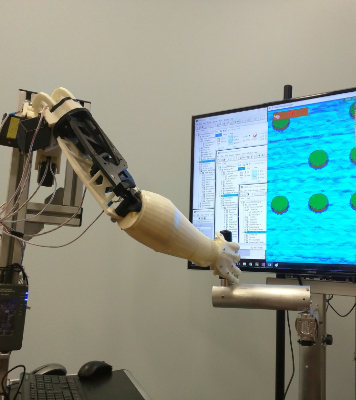
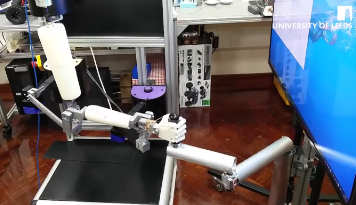
ALAN-Arm Prototype 2
Based on the open-source mechanical design InMoov, Prototype 1 followed a conventional humanoid arm approach with all actuators contained within the arm (hence the name of internally actuated design). It allowed the team to rapidly prototype the first iteration of ALAN-Arm and build the experience and knowledge foundation on humanoid arm manipulation.
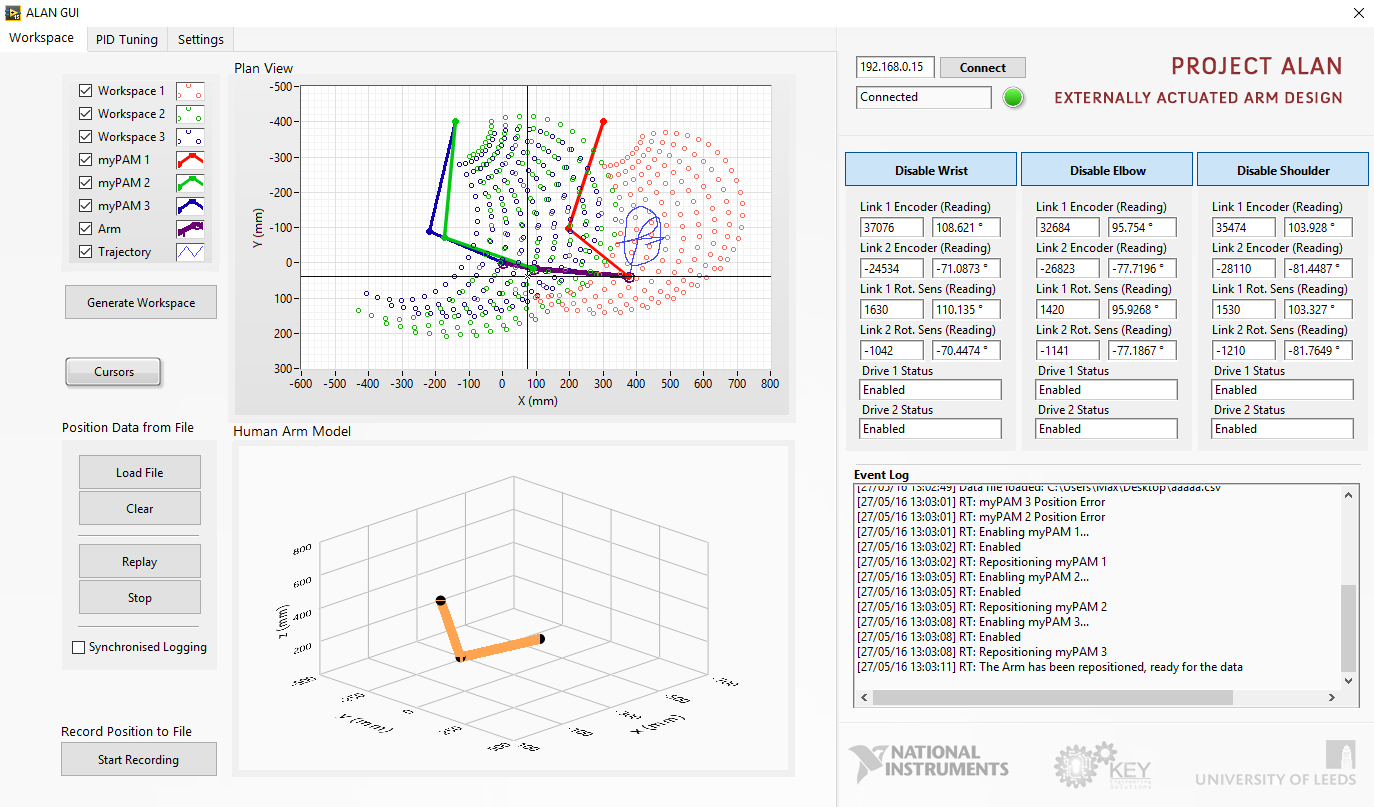 Prototype 2 graphical user interface
Secure IoT Communications
Project ALAN brings together robotics, medical engineering, and secure data systems to develop innovative technology for post-stroke rehabilitation. Our goal is to create a commercially viable robotic rehabilitation device that helps patients recover movement more effectively while supporting healthcare providers with advanced tools.
The Problem
The project also explored the possibility of allowing for remote rehabilitation using multiple interconnected humanoid arms and physiotherapy systems (Internet of Things). This is when patients can perform their movement exercises at home, and have all their progress securely streamed over the Internet which can then be used for assessment and monitoring of the patients. The team looked into how these large amounts of data can be collected from the rehabilitation device, transmitted to the therapist and processed efficiently. The team was able to create a Hardware Abstraction Layer (HAL) around the humanoid arm to ensure physical safety of the device as well as implement encryption on all messages sent to ensure secure communications of large and confidential data that would be exchanged.
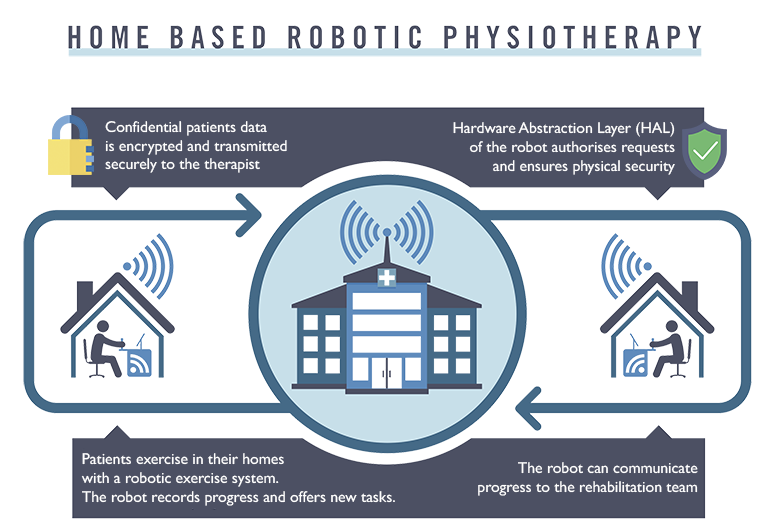
A further use of this system would allow for faster and higher quality research to be performed. Researchers could use volunteering patients' data to collect evidence of what influences motor learning in people with upper limb impairment. For example, different levels of robotic assistance could be assigned to patients. Through analysis of collected data, we may obtain an insight into the factors that contribute to a faster recovery of motor skills - ultimately helping the future development higher quality rehabilitation systems.
In conclusion, Team ALAN delivered two humanoid robotic arms that will accelerate the development of robotic rehabilitation systems and remote rehabilitation.