
Our Projects - At-Home Rehabilitation System Using IMU Technology
Low-Cost, At-Home Rehabilitation System Using IMU Technology

O YoungProject Student
P HynesProject Student
Z KardosProject Student
S WilliamsonProject Student
Masters
IMU, Mocap, AI
2023
Overview
A wearable motion capture system that turns upper-limb stroke rehabilitation into a game, and gives physiotherapists remote insight into patient progress.
Stroke accounts for roughly 10% of global deaths, and more than 40% of survivors are left with chronic hemiparesis. As survival rates improve, the shortage of physiotherapists grows, and nearly half of all stroke survivors never regain useful function in their upper limb. Recovery demands 30-45 minutes of repetitive daily exercises, but patients often find these drills tedious and disengaging. Some commercial solutions exist, but at very high costs they're out of reach for most home users.
What We Built
A complete rehabilitation system combining hardware, software, and data analytics:
-
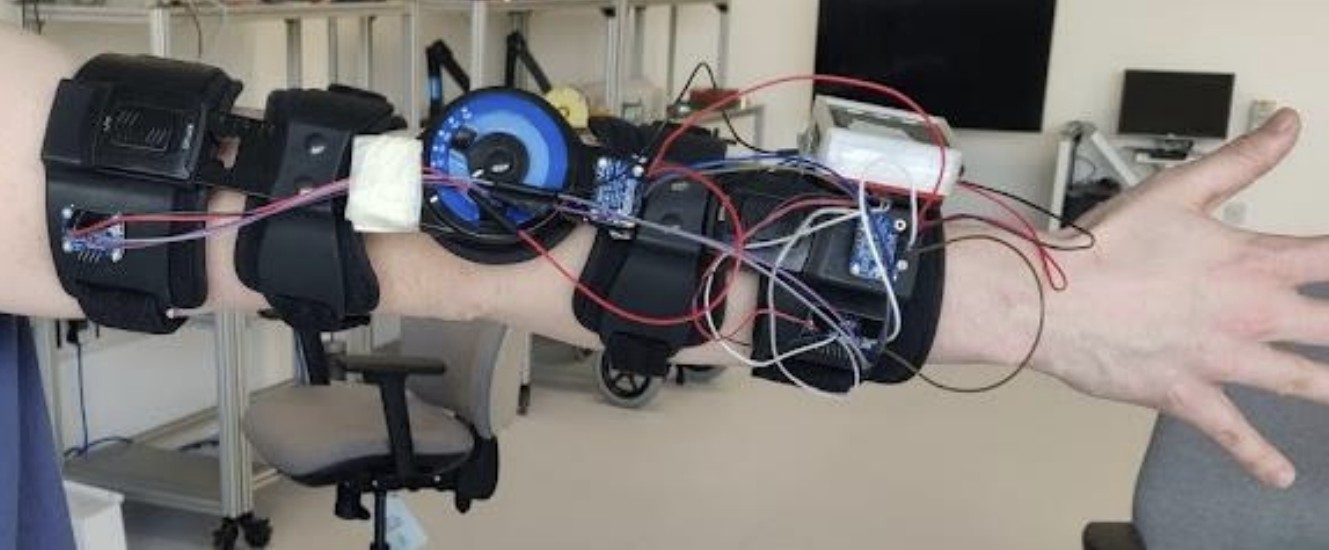
Wearable motion-capture brace — Three BNO055 IMUs mounted on an adjustable arm brace, driven by an M5Stack microcontroller, streaming 100 Hz orientation data over Bluetooth Low Energy.
-
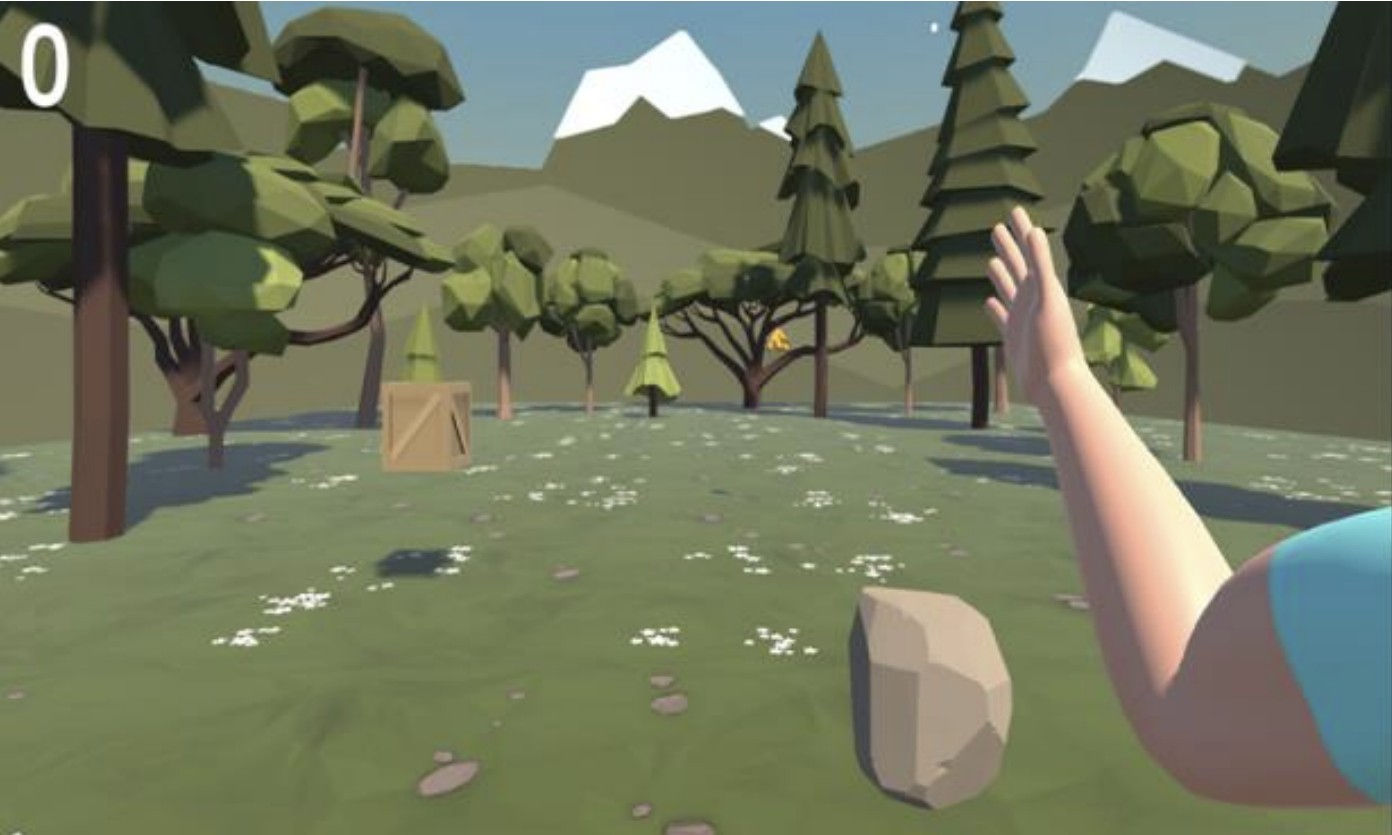
Unity game — A reach-and-grab experience where patients catch bananas, smash rocks, and collect power-ups, all mapped to activities of daily living (ADL).
- Middleware pipeline — A C# / Python architecture using UDP for asynchronous, low-latency communication between the brace, the game, and the analysis layer.
- Performance feedback portal — A MATLAB analysis engine feeds a MySQL database and PHP web app, letting physiotherapists track duration, velocity, range of motion, and smoothness across sessions.
Key Results
| Metric | Result |
|---|---|
| Total device cost | £203.56 (vs. $5,000+ for commercial equivalents) |
| Device weight | 620.8 g |
| Battery life | 3 h 47 min continuous use |
| Wireless range | 15+ metres |
| BLE packet transmission reliability | 99.9% |
| Correlation with OptoTrak gold-standard | r = 0.83-0.87 across velocity, RoM, and jerk |
A test session with 14 volunteers rated the system positively on comfort, ease of use, engagement, and visual accuracy of the virtual arm.
Technical Highlights