
Our Projects - Home Rehabilitation Robot
Design and Development of a Home-Based Upper Limb Rehabilitation Robot for Stroke Recovery

Matthew Foster, Mubarak Adedigba, Kin Chong, Conor TarpeyProject Students

Dr Justin GallagherSupervisor
MEng
Robotics, AI
2026
Project Overview
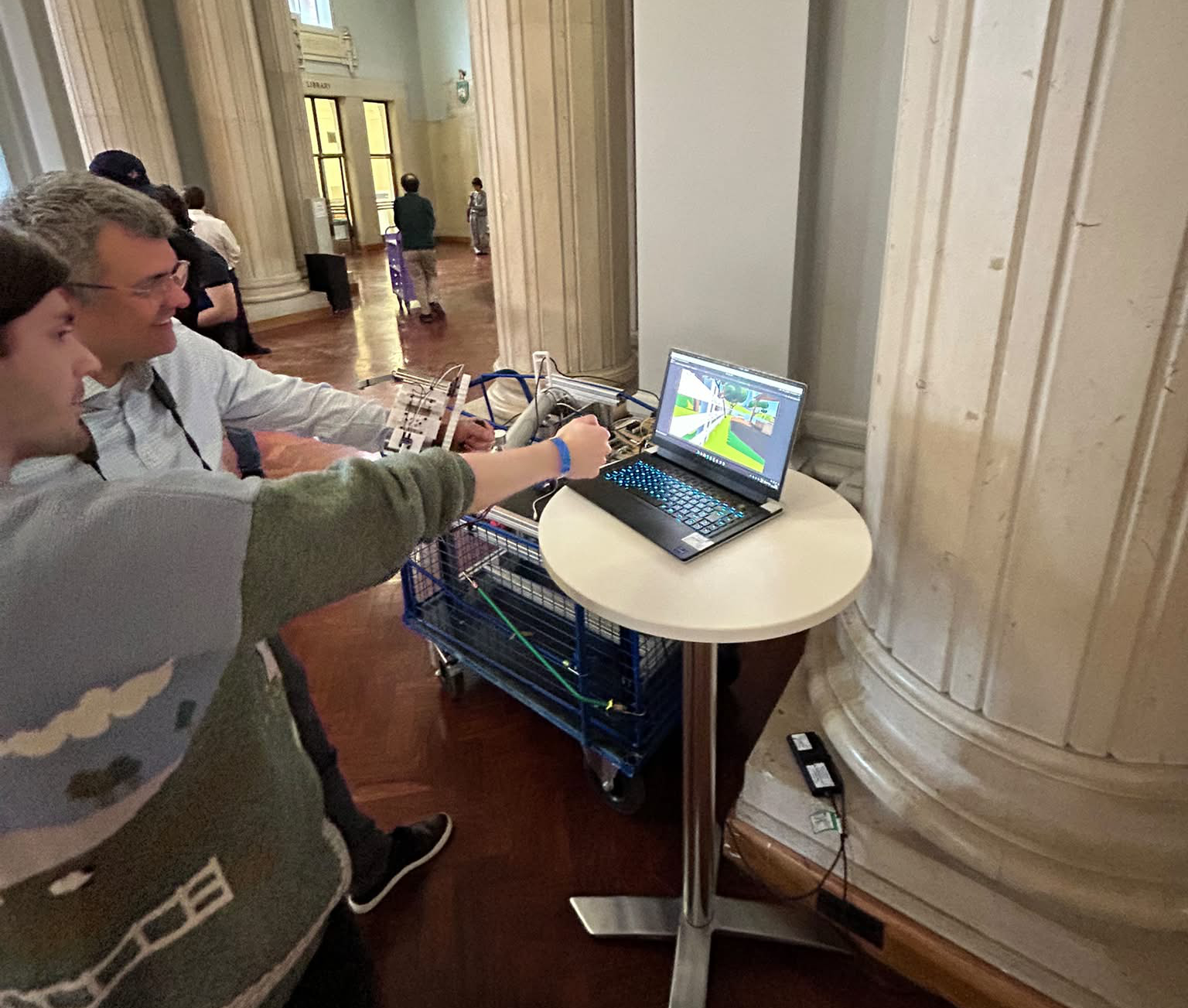
This project developed an interactive upper-limb rehabilitation robot intended to support stroke patients during home-based recovery. The system combines two-dimensional planar arm rehabilitation with wrist pronation and supination training, allowing users to practise movements associated with everyday activities such as reaching, grasping and rotating the wrist.
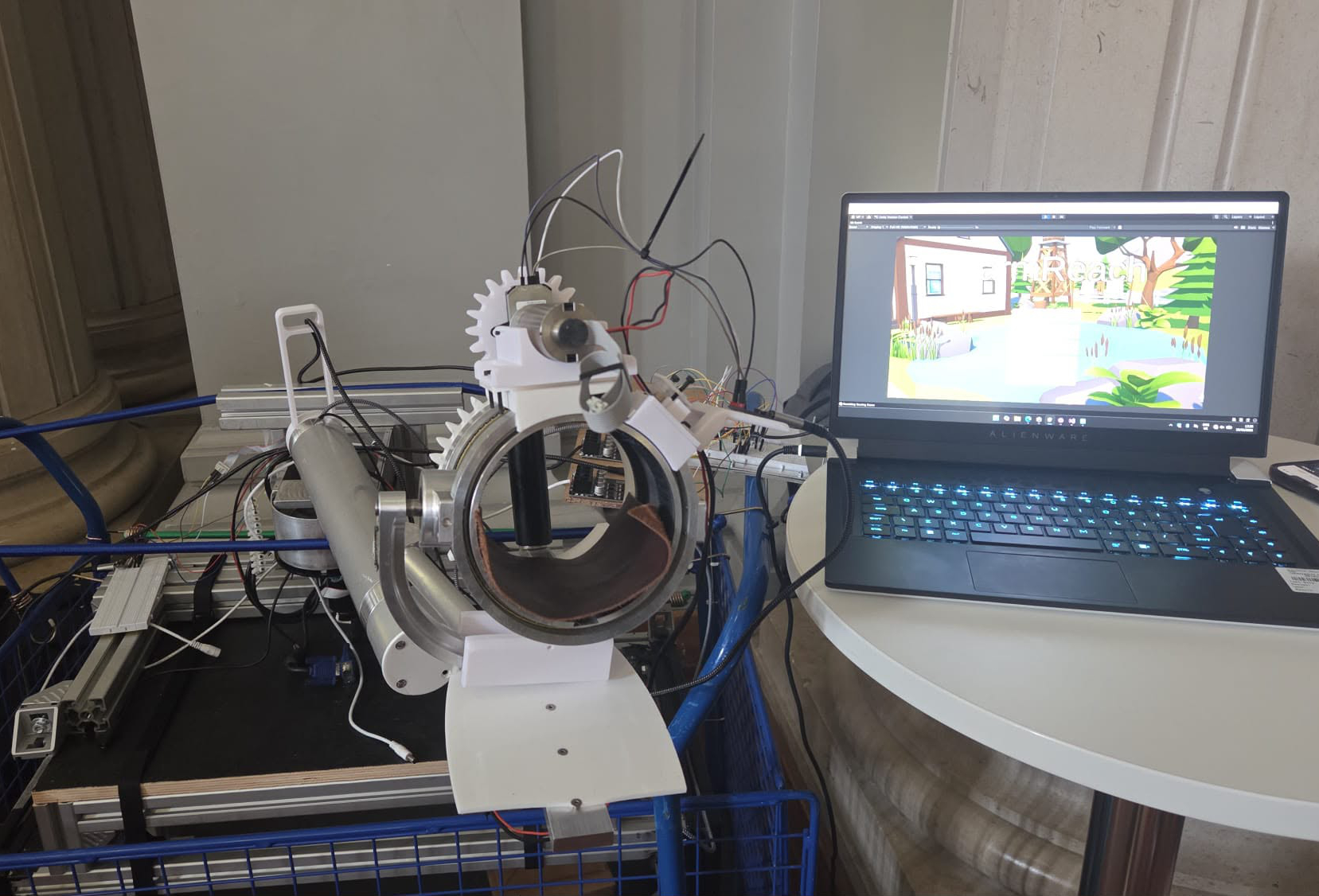
Building on the existing MyPAM rehabilitation platform, the project added a custom wrist module capable of providing assisted rotational movement. The final prototype brought mechanical actuation, embedded electronics, kinematic processing and interactive rehabilitation software together in one integrated system.
Mechanical and Embedded Design
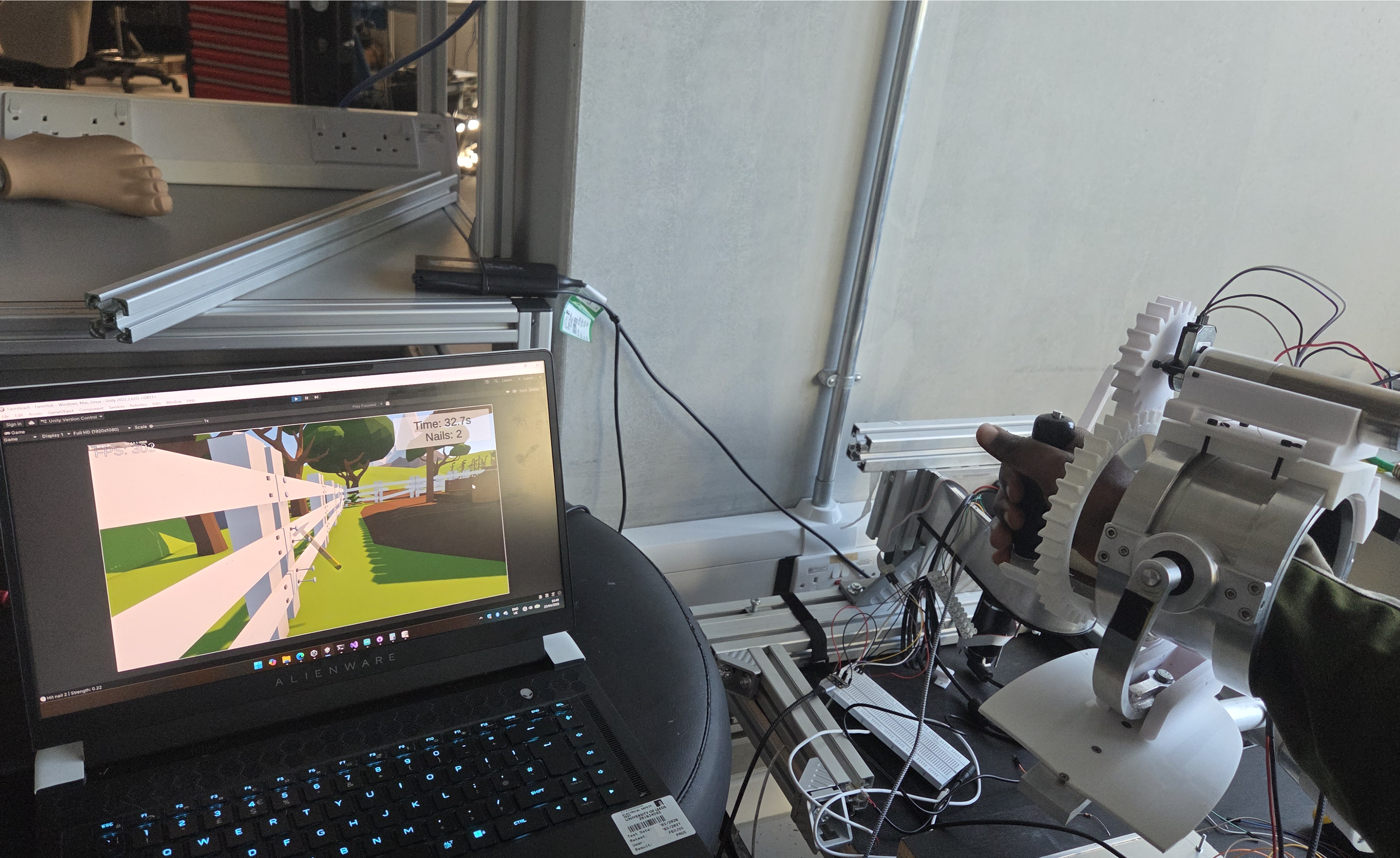
Planar arm motion is driven by Maxon motors, while a custom gear-driven wrist mechanism uses 3D-printed structural components to assist rotational movement. Incremental encoders provide position feedback and an ESP32 microcontroller manages real-time encoder acquisition, PWM-based assistance control and communication with the higher-level software.
Interactive Rehabilitation
A ROS 2 architecture connects the robot to a Unity-based rehabilitation environment. The gamified interface was designed to improve engagement and adherence through task-based exercises, including precision-focused exploration activities and endurance exercises intended to assess fatigue.
Movement Analysis and Progress Tracking
A custom kinematic analysis framework evaluates rehabilitation performance using clinically relevant measures, including:
Session data is stored in an SQLite database, supporting long-term monitoring and quantitative analysis of motor recovery trends.
Outcome
Testing demonstrated stable real-time communication between the hardware and software subsystems and reliable closed-loop interaction. The work shows the feasibility of combining robotic assistance, real-time movement analysis and game-based therapy in a lower-cost platform designed to make post-stroke rehabilitation more accessible and engaging at home.